
Supplement label requirements: FDA & DSHEA basics
If you sell a vitamin, a protein powder, or a gummy in the United States, the label is not just branding. It's a regulated document. This is a plain-language tour of what has to appear on a dietary supplement label, and where brands most often get it wrong.
THE SHORT ANSWER
Enter your container size to get the label size, then price it. Dietary supplements sold in the US are regulated by the FDA as a category of food under the Dietary Supplement Health and Education Act (DSHEA). A compliant label generally has to carry a defined set of elements, and claims are tightly constrained. At a high level, a supplement label must include:
- Statement of identity: what the product is (e.g. "dietary supplement")
- Net quantity of contents: count, weight, or volume
- Supplement Facts panel: serving size, dietary ingredients, and amounts per serving
- Ingredient list: the ingredients not already declared in the Supplement Facts panel ("other ingredients"), in descending order by weight
- Manufacturer / distributor: name and place of business
- Adverse-event contact: a domestic address or phone number for serious adverse-event reports
Brands may make structure/function claims but not disease claims, and any structure/function claim triggers a required FDA disclaimer statement.
This is not legal or regulatory advice. Supplement labeling rules are set by the FDA, they are detailed, and they change. Nothing here states a definitive requirement for your product or market. Before you print, confirm every element against current FDA guidance and have your label reviewed by qualified regulatory or legal counsel. Treat everything below as a general orientation, not a checklist you can rely on.
Find your label size
Measure the usable panel on the real container, not the capacity printed on it. Enter the diameter and the panel height. A full wrap is the circumference (π × diameter) plus a small overlap, or minus a small gap.
Wrap calculator
8.29 × 3.63 in
Circumference 8.17 in · 1/16 in clearance top and bottom
Planning math for a straight cylinder: wrap = π × diameter + overlap. Confirm with a full-size mockup on the real container.
Why start in PackOS
Once you know the details, see the price, the dieline and your label on a roll in one place.
From file to price in PackOS
What you get in PackOS
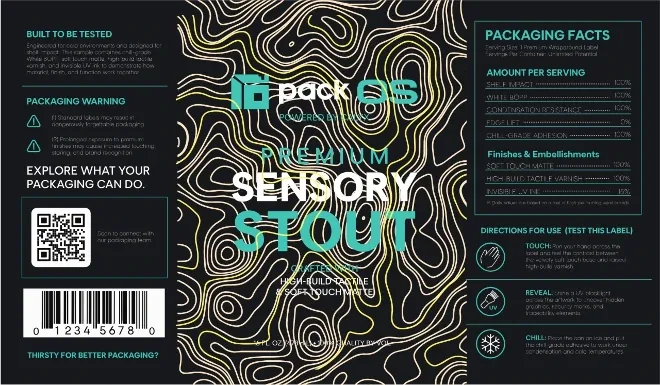
Skip the spec form
Upload a PDF or AI file and PackOS reads the size, shape, colors and finishes from your design. Nothing to retype.
Upload artwork →Instant price · sample label
| Run | Per label | Total |
|---|---|---|
| 10,000 | $0.1996 | $2,346 |
| 60,000 | $0.1692 | $10,500 |
| 110,000 | $0.1670 | $18,722 |
| 150,000 | $0.1663 | $25,290 |
| 200,000 | $0.1658 | $33,500 |
| 250,000 | $0.1655 | $41,725 |
Know the price before you ask
Every quantity is priced as soon as the file is read, with no waiting on a quote. Runs start at 10,000 labels per size with at least 2,500 per SKU. Your price depends on your artwork. Order online; the proof and a payment link follow by email.
Get instant label pricing →
Get a production dieline
No artwork yet? Draw the die with cut, bleed and safe-area lines so your designer starts from the right shape. We email it with your quote.
Create a label dieline →
See it on the roll first
Turn your label on a 3D roll in the copy position you choose and check it before you order.
Upload artwork →Labels only. Foil, embossing and other specialty work are quoted by our team.
How US dietary supplements are regulated
In the United States, a dietary supplement is legally a food, not a drug. The Dietary Supplement Health and Education Act (DSHEA) created a distinct category under the Federal Food, Drug, and Cosmetic Act and set the framework the FDA uses to oversee supplements today. Most of the labeling rules follow from that.
Because supplements sit inside the food framework, they inherit food-labeling conventions (a statement of identity, a net-quantity declaration, an ingredient list, and responsible-party information) and then add supplement-specific rules on top, most visibly the Supplement Facts panel that replaces the Nutrition Facts box you'd see on a conventional food. It also means the categories overlap: many of the allergen and food-contact considerations we cover in our guide to food packaging regulations apply to supplements too.
Two agencies matter here, and it's worth keeping them straight. The FDA governs the label itself: what must appear on the package and how claims are framed. The FTC polices advertising and other marketing claims, including websites and social media. A claim that's a problem for one is usually a problem for the other, so the safe mental model is: if you can't substantiate it, don't say it, on the label or anywhere else. This article is one piece of the complete guide to supplement packaging, which covers the formats and physical requirements the label lives on.
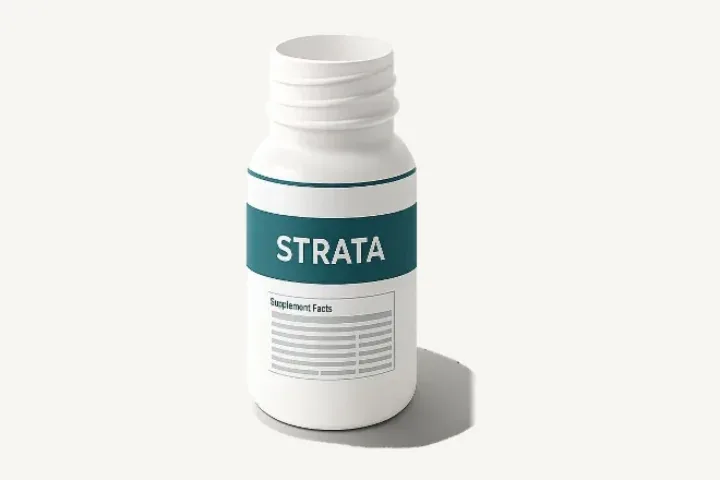
Supplement labels
Labels for supplement bottles and jars
See the materials and finishes we print for supplement brands, with instant pricing on the stocks we carry.
See supplement labels →The label elements every supplement needs
A supplement label is built from a handful of mandatory components. The exact placement, type sizes, and panel definitions are specified by the FDA and are more nuanced than any summary can capture, so the table below describes what each element is for rather than how to format it. Use it to make sure nothing is missing, then verify the specifics.
| Element | What it covers | Generally required by |
|---|---|---|
| Statement of identity | The name of the product and the words that identify it as a dietary supplement. | FDA (food labeling under the FD&C Act) |
| Net quantity of contents | How much is in the package (count, net weight, or volume), on the front panel. | FDA / FPLA |
| Supplement Facts panel | Serving size, servings per container, dietary ingredients, and amounts per serving. | FDA (supplement-specific) |
| Ingredient list | Ingredients not declared in the Supplement Facts panel, such as fillers, capsule shell and flavors ("other ingredients"), in descending order of predominance by weight. | FDA |
| Allergen information | Declaration of major food allergens present in the product. | FDA / FALCPA |
| Responsible party | Name and place of business of the manufacturer, packer, or distributor. | FDA |
| Adverse-event contact | A domestic address or domestic phone number for receiving reports of serious adverse events. | FDA / FD&C Act section 403(y) |
| Claim disclaimer | The required statement when a structure/function claim is made. | FDA / DSHEA |
The label is conventionally organized across a principal display panel (the front, what the shopper sees on shelf) and an information panel (usually the right of the front, carrying the Supplement Facts, ingredients, and responsible-party details). Which element goes where is itself governed, so don't treat the split as a design free-for-all. On very small packages the FDA provides alternatives for how information can be arranged, which is another reason to verify against current guidance rather than assume.
Have your artwork? See the price for every quantity in seconds.
Get instant label pricing →Inside the Supplement Facts panel
The Supplement Facts panel is the heart of the label and the part most specific to this category. It is the supplement equivalent of the Nutrition Facts box, standardized so a shopper can compare products at a glance. Conceptually it declares:
- Serving sizeThe amount the manufacturer suggests as a serving (e.g. two capsules).
- Servings per containerHow many of those servings the package holds.
- Each dietary ingredientListed with the quantitative amount per serving.
- Percent Daily ValueShown for ingredients that have an established Daily Value; ingredients without one are marked accordingly.
Two ideas trip up new brands. First, ingredients that have a Daily Value and those that don't are handled differently within the panel, and proprietary blends have their own presentation conventions. Get a regulatory review of how yours is laid out. Second, the numbers on the panel are a commitment: what you declare has to match what's actually in the product within the tolerances the FDA expects, which is where good manufacturing practice and testing come in. The panel is not a place to round optimistically.
Everything in the panel also has to be legible on the finished, physical label. That sounds obvious until you're fitting a full Supplement Facts box onto the curved wall of a small packer bottle. Legibility is a compliance question, not just a design one.
Claims: structure/function versus disease
This is where supplement brands most often cross a line without realizing it. DSHEA draws a bright line between two kinds of claims, and the difference is the difference between a legal supplement and an unapproved drug.
Labeling supplements? Start with the supplement label page.
Supplement labels →A structure/function claim describes how an ingredient affects the normal structure or function of the body, for example that calcium "supports strong bones" or that a botanical "helps maintain a healthy immune system." These are generally permitted for supplements. A disease claim, by contrast, states or implies that the product diagnoses, treats, cures, mitigates, or prevents a disease, such as "cures arthritis" or "prevents the flu." Disease claims turn your product, in the eyes of the FDA, into a drug, and drugs require approval that supplements do not have.
STRUCTURE/FUNCTION · GENERALLY PERMITTED
- Calcium "supports strong bones"
- A botanical "helps maintain a healthy immune system"
- Describes the normal structure or function of the body
DISEASE CLAIM · TREATED AS A DRUG
- "Cures arthritis"
- "Prevents the flu"
- Says or implies it diagnoses, treats, cures, mitigates or prevents a disease
The catch is that the line is drawn on meaning, not on magic words. Imagery, product names, and even the diseases your target audience is known to have can push an otherwise innocent phrase across into disease-claim territory. When in doubt, describe what the ingredient does for a normal, healthy body, and stop there.
Whenever you make a structure/function claim, DSHEA requires an accompanying disclaimer: the familiar language noting that the statement has not been evaluated by the FDA and that the product is not intended to diagnose, treat, cure, or prevent any disease. The exact wording, the placement, and how it must relate to the claim are all specified, so use the current FDA text verbatim rather than paraphrasing it. Missing or malformed disclaimers are a common and avoidable compliance gap.
Two more obligations sit alongside the label copy. The label must carry a domestic address or domestic phone number for receiving reports of serious adverse events (FD&C Act section 403(y)), and the firm named on the label must forward any serious adverse-event report it receives to the FDA within 15 business days. Separately, within 30 days of first marketing a supplement that carries a structure/function claim, the firm must notify the FDA of the claim and its disclaimer text (21 CFR 101.93). Confirm both with counsel.
Dieline generator
Make a production label dieline
Enter the size and shape and get cut, bleed and safe-area lines before the artwork is final.
Create a label dieline →Allergens, warnings, and tamper-evidence
Because supplements live inside the food framework, major food allergens present in the product (milk, eggs, fish, crustacean shellfish, tree nuts, peanuts, wheat, soybeans, and, since 1 January 2023, sesame) generally have to be declared, following the same allergen-labeling expectations that apply to conventional foods. Our food packaging regulations guide covers that ground in more depth. Beyond allergens, some ingredients carry their own warning-statement expectations, and certain populations (such as pregnant or nursing consumers) may need to be addressed depending on the formula. None of this is one-size-fits-all; it is ingredient-driven and jurisdiction-sensitive.
There is also a physical dimension to compliance that isn't printed copy at all. Many supplement products are expected to ship with tamper-evident features so a consumer can see whether the package has been opened, typically an induction seal under the cap, a shrink band, or a blister that can't be re-closed invisibly. This is closely related to, but distinct from, child-resistance.
Tamper-evident: a packaging feature that gives visible, hard-to-reverse proof that a package has been opened, such as an induction seal, shrink band, or breakaway cap ring. See more terms in the packaging glossary.
The takeaway: your labeling obligations and your packaging structure are two halves of one compliance picture. A perfect Supplement Facts panel on a package with no tamper-evidence, or an allergen declaration that omits an ingredient hiding in your capsule shell, is still a problem. Supplement brands in the nutraceuticals space generally solve the label and the package together rather than as separate projects.
Getting the artwork right on a small label
Once you know what has to appear, the practical problem is fitting it onto a small, often curved surface without any of it being trimmed, distorted, or rendered illegible on press. This is where regulatory content meets production reality, and it's where a lot of otherwise-compliant labels fail at the last step.
- Legibility survives production. Type that looks fine in the design file can close up or fill in when it's actually printed at scale. Mandatory copy (the Supplement Facts panel, the disclaimer, the ingredient list) has to stay readable on the finished label, not just on screen.
- Nothing critical lands in the trim. Required elements need to sit inside the safety margin so normal cutting and application tolerance never clips them. Our guide to label dieline and bleed specs walks through the cut, bleed, and safety margins that keep that from happening.
- Color and contrast hold up. Small warning and disclaimer text has to stay high-contrast against its background across the full print run, not just on the first sheet.
- The panel is locked, the marketing is flexible. Treat the regulated content as fixed geometry the design has to accommodate, rather than something you compress to make room for a logo.
A good rule of thumb: build the regulated content first, at a size you've confirmed is legible in production, and design the brand around it. Reversing that order is how the Supplement Facts panel ends up shrunk to illegibility to fit an oversized hero graphic.
Keep the Supplement Facts panel and disclaimer inside the safe area from the start.
Create a label dieline →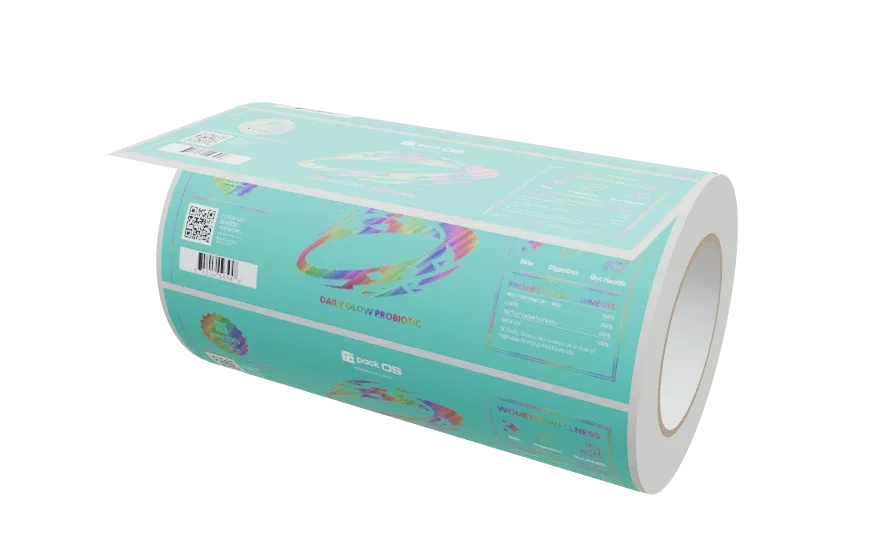
Instant label pricing
Upload your artwork and see the price
Drop in a PDF or AI file. PackOS reads the size, shape and colors and prices it from 10,000 labels per size.
Upload artwork →Where PackOS fits
PackOS won't tell you whether your claims are compliant. That's a job for your regulatory team and counsel. What it can help with is the production side of the label. Create a label dieline with cut, bleed and safety lines so you can keep required copy inside the safety margin, where the die won't trim it. You and your regulatory advisors decide what the label must say. Upload your label artwork to Quick Quote for an instant label price, review the detected attributes and confirm the selected specification. Compare the available quantities and read the quote's assumptions, tooling and delivery terms.
Frequently asked questions
Who regulates dietary supplement labels in the US?
The FDA regulates dietary supplement labels in the United States. Supplements are treated as a category of food under the Dietary Supplement Health and Education Act, or DSHEA, so they follow food labeling rules plus supplement-specific requirements such as the Supplement Facts panel. The FTC separately oversees advertising claims.
What is a Supplement Facts panel?
A Supplement Facts panel is the standardized information box that lists the serving size, the servings per container, each dietary ingredient, and the amount per serving, along with a percent Daily Value where one has been established. It is the supplement equivalent of the Nutrition Facts panel used on conventional foods.
What is the difference between a structure/function claim and a disease claim?
A structure/function claim describes how an ingredient affects the normal structure or function of the body, such as supporting immune health. A disease claim states that a product diagnoses, treats, cures, or prevents a disease. Supplements may make structure/function claims but not disease claims, and a structure/function claim triggers a required FDA disclaimer statement.
Do supplement labels need a disclaimer?
Yes. When a supplement label carries a structure/function claim, DSHEA requires an accompanying disclaimer noting that the statement has not been evaluated by the FDA and that the product is not intended to diagnose, treat, cure, or prevent any disease. The exact wording and placement rules should be verified against current FDA guidance.
What information must appear on a supplement label?
At a high level a US supplement label must include a statement of identity, the net quantity of contents, a Supplement Facts panel, an ingredient statement for any ingredients not already declared in the Supplement Facts panel, and the name and place of business of the manufacturer, packer, or distributor, plus a domestic address or phone number for reporting serious adverse events. Allergen disclosure and other requirements can also apply. Formatting details are specified by the FDA and change over time, so verify them before printing.